Research, analysis, and strategic foresight.
Featured reports, country studies, and briefings from our analysts and senior fellows.

Navigating the Geopolitical Fracture: Strategic Imperatives for the 2026 Global Economy
As global governance fragments into transactional minilateral alliances, multilateral institutions face persistent paralysis in 2026. Enterprise resilience now depends on navigating balkanized technology ecosystems, weaponized resource supply chains, and structural economic friction. Strategic agility and localized compliance are critical for global corporate leadership.

Navigating the New Geoeconomic Architecture of 2026
Global business leaders in 2026 confront an international environment shaped by fragmented trade architectures, aggressive industrial policy, and elevated baseline interest rates. As technological bifurcation deepens between major powers and regional powers assert resource sovereignty, corporate performance requires shifting from legacy efficiency models to active geopolitical risk hedging.

Navigating a Fragmented World Order and Industrial Realignment in 2026
As structural fragmentation accelerates in 2026, global trade and security are increasingly dictated by industrial policy, technological sovereignty, and transactional middle-power diplomacy. Multinational enterprises must adapt to dual-track supply chains and regulatory divergence across major economic blocs. Strategic resilience has replaced cost efficiency as the paramount corporate imperative.

The Continent's Quiet Coronation: How Africa's Women Are Redrawing the Map of Power
From Windhoek's State House to the floor of the Rwandan parliament, a generation of women is not simply arriving in office. They are arriving with a governing philosophy, and the rest of the world would do nothing but take notes.

The Scholarship as Statecraft: How China Is Quietly Building the Global South's Next Generation of Leaders
No embassy in Cairo has ever had to persuade a single Egyptian family that an education matters. What Beijing understood, and what took the rest of the world two decades to notice, is that it did not need to sell education. It only needed to be the one offering it, free, at the exact moment everyone else stopped.
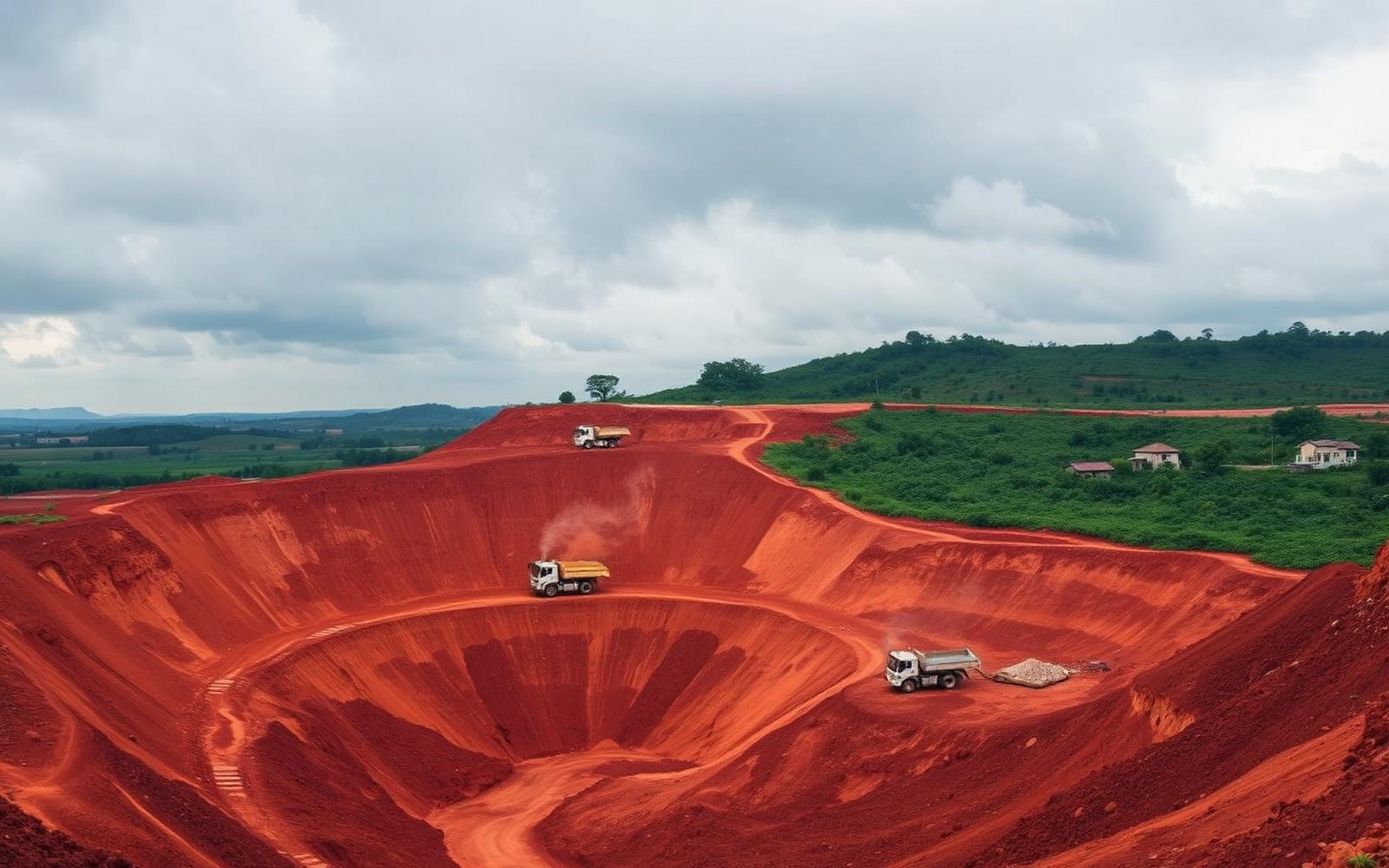
The Lithium Test: What Ghana's Ewoyaa Deal Reveals about Africa's New Bargaining Table with Beijing
Ghana did not discover lithium this year. It discovered what it means to be wanted by everyone at once, and what that wanting costs when the country doing the wanting has not yet built the institutions to referee it.

Hemispheric Divergence: Geopolitical Realignment and Macroeconomic Fracture in the Americas Through 2026
This briefing analyzes the strategic and economic forces reshaping the Americas in 2026. Institutional investors and multinational executives face a complex landscape defined by critical mineral competition, infrastructure deficits, security threats, and political volatility.

Navigating Fragmented Security and Industrial Realignment Across Europe in 2026
As Europe confronts heightened transatlantic unpredictability and deep structural competitiveness challenges in 2026, institutional leaders must navigate a rapid defense expansion alongside strict fiscal realities. This research briefing outlines key geopolitical risk factors, energy security dynamics, and regulatory shifts shaping European corporate strategy and capital allocation.

Navigating the New Indo-Pacific Order: Strategic Bifurcation, Supply Chain Realignment, and Corporate Resilience in Asia
Asia in 2026 is defined by a mature state of structured competition between the U.S. and China, driving supply chain diversification, defense integration, and regulatory divergence. As middle powers navigate this bifurcation, corporate leaders must balance capital allocation across high-growth markets like India and Southeast Asia while hardening operational resilience against kinetic and cyber risks.

Navigating Africa's Structural Shift: Geoeconomic Realignment, Industrialization, and Market Integration in 2026
In 2026, African economies are navigating a structural transition marked by sovereign debt stabilization, aggressive resource nationalism, and deepening trade integration under the AfCFTA. While security fragmentation in the Sahel and currency volatility present operational risks, expanding digital infrastructure and multi-aligned foreign investment offer strategic opportunities for institutional capital.

AfCFTA at Five: Africa's Industrialization Bet, Debt Restructurings, and the 2026 Sahel Realignment
Five years after the African Continental Free Trade Area moved from ratification to operational trading, the continent's growth story is being rewritten by three simultaneous shifts: a serious industrialization push anchored in Morocco, Egypt, South Africa and Nigeria; a Common Framework debt-restructuring cycle nearing conclusion for Zambia, Ghana and Ethiopia; and a Sahel security realignment that has redrawn francophone West Africa's strategic map.

The Second Scramble: Religious Fundamentalism, the Global South, and the Quiet Contest for the Twenty-First-Century Soul
Why the fastest-growing force in the Global South's politics is not a party, a currency bloc, or an army - and why its rise cannot be understood without asking who benefits from it.

Nearshoring Hubs Compared: Mexico vs. Vietnam and Supply Chain Diversification Strategies in 2026
Mexico and Vietnam have emerged as the two dominant nearshoring and China+1 destinations of the current decade. This briefing compares them across labor demographics, trade-agreement coverage (USMCA vs CPTPP and EVFTA), logistics infrastructure, and the operational risks that decide where a specific supply chain should land.

BRICS+ Expansion in 2025: Strategic Implications of Saudi Arabia, UAE, and Egypt Joining the Bloc
The formal accession of Saudi Arabia, the United Arab Emirates, Egypt, Iran and Ethiopia to BRICS in January 2024, followed by the bloc's 2025 Kazan-defined enlargement agenda, has reorganized the geometry of global economic diplomacy in ways that are only now becoming legible.
Mexico Overtakes China as Largest U.S. Trade Partner: Nearshoring Capital Flows Accelerate
Mexico's emergence as the United States' largest goods trading partner - confirmed by Census Bureau data for 2023 and consolidated through 2025 - marks the most significant restructuring of North American supply chains since the original NAFTA framework took effect in 1994.

Germany's 2025 Snap Election and the Return of CDU/CSU Under Friedrich Merz
The February 23, 2025 federal election ended the Scholz coalition, returned the CDU/CSU to government under Friedrich Merz, and produced a Bundestag in which a self-described radical-right party reached above 20 percent for the first time in postwar German history.

After the Gaza Ceasefire: Reconstruction Politics and the Abraham Accords Revival
The January 2025 phased ceasefire agreement between Israel and Hamas, mediated by Qatar, Egypt and the United States, opened a politically narrow but operationally significant window for Gaza reconstruction and a renegotiated regional security architecture.
ECOWAS After the Niger, Mali, Burkina Faso Withdrawal: The Sahel Confederation's First Year
The January 2024 announcement of withdrawal from ECOWAS by Mali, Burkina Faso and Niger, and the subsequent formalization of the Alliance of Sahel States as a confederation, has restructured West African security and trade architecture and accelerated French strategic disengagement.
Page 1 of 2 · 19 briefings
Where our research is produced.